


Blog
When to Install and Remove Winter Turf Blankets
Protect turf, boost growth, and extend field life with FieldSaver covers.
August 25, 2025

Knowing when to put a growth cover down, and when to pull it back, matters as much as the cover itself. Install too late and the turf has already gone dormant. Pull the cover too early in spring and tender grass meets a cold snap it is not ready for. This guide walks through the timing decisions field managers face from the first fall frost through spring green-up, and how those calls shift by grass type and climate. For how the covers work and what they are built from, see our winter turf blankets and growth covers product page.
When Should You Put Down Winter Turf Blankets?
Lay growth covers down in fall once nighttime temperatures settle into the 30s and low 40s, and before the turf goes fully dormant. Once nighttime temperatures reach the 30s or low 40s, a cover can be used to help extend the growing season. Covering at that point lets the blanket trap enough heat to keep roots active rather than simply insulating dead-dormant grass.
A soil thermometer is the most reliable guide. Read soil temperature at a two-inch depth, and record it at the same time each day so the comparison stays accurate, measuring both under the cover and on uncovered turf. Once the cover is down, the temperature underneath can run 20 to 30 degrees warmer than the air outside the cover, which is what holds off dormancy and drives late-season growth.
One precaution for cool-season fields: a preventative fungicide application a day or two before covering reduces disease risk in the warm, humid environment the blanket creates.
Cool-Season vs Warm-Season Grass: Does Timing Change?
Yes. The cover goes down on different cues depending on the grass. Cool-season fields (Kentucky bluegrass, perennial ryegrass): Most northern athletic fields fall here, and air temperature is a good indicator of when to apply a cover, with most northern fields being ryegrass or Kentucky bluegrass. Cover once nighttime lows reach the 30s and low 40s to extend growth into the cold months. The ideal soil temperature range for root growth in these grasses is roughly 55 to 65°F, so the warmth a cover holds in directly extends the productive window.
Warm-season fields (bermudagrass, zoysiagrass): Cover before the first frost. Bermudagrass held under a cover stays semi-dormant rather than going completely dormant, so it comes out of dormancy faster in spring than an uncovered field. The trade-off comes later: warm-season grass needs warmer spring temperatures than cool-season grass before it breaks dormancy, so covers tend to stay on longer.
When Should You Remove a Growth Cover in Spring?
Remove growth covers a week or two after spring green-up has clearly begun, then pull them for good about a week before the field returns to play so the surface can dry and take a fresh mow. Removing the blanket roughly a week before the season starts gives the field time to dry and get a fresh mow.
Resist uncovering at the first sign of green. Grass under the cover has grown in response to the warmer air and soil temperatures underneath, so it is not ready for the sharp hit of cooler open air, and an early pull can undo weeks of progress.
Keep watching the forecast even after green-up. It is important to cover the field back up for any late-spring frosts once green-up has started. As the field returns to a normal program, hold the first spring nitrogen application until soil temperatures at a four-inch depth are consistently 65°F or higher.
Managing Covers Through Winter
A cover is not set-and-forget. Growing grass under it needs tending through the season.
Peel back on warm spells: When a midwinter break pushes temperatures into the 40s or 50s, take the cover off, expose the turf to direct sun, then re-cover.
Mow once or twice over winter: If the cover is doing its job, the grass keeps growing. Pull it on a weather break, mow, and re-cover. Letting growth run past about seven inches shades out the lower canopy, leaving thin, leggy grass below three inches that is all you have left at the spring mow-down.
Vent on warm days: If daytime temperatures exceed 55°F, uncover during the warmest hours to reduce the risk of fungal growth, then re-cover for the cold.
Monitor the microclimate: Keep checking the canopy and soil temperature under the cover. Temperatures can build quickly under a cover in certain conditions, and the higher sun angles of late winter and early spring intensify the heating compared with the low winter sun.
How to Install and Anchor Turf Blankets
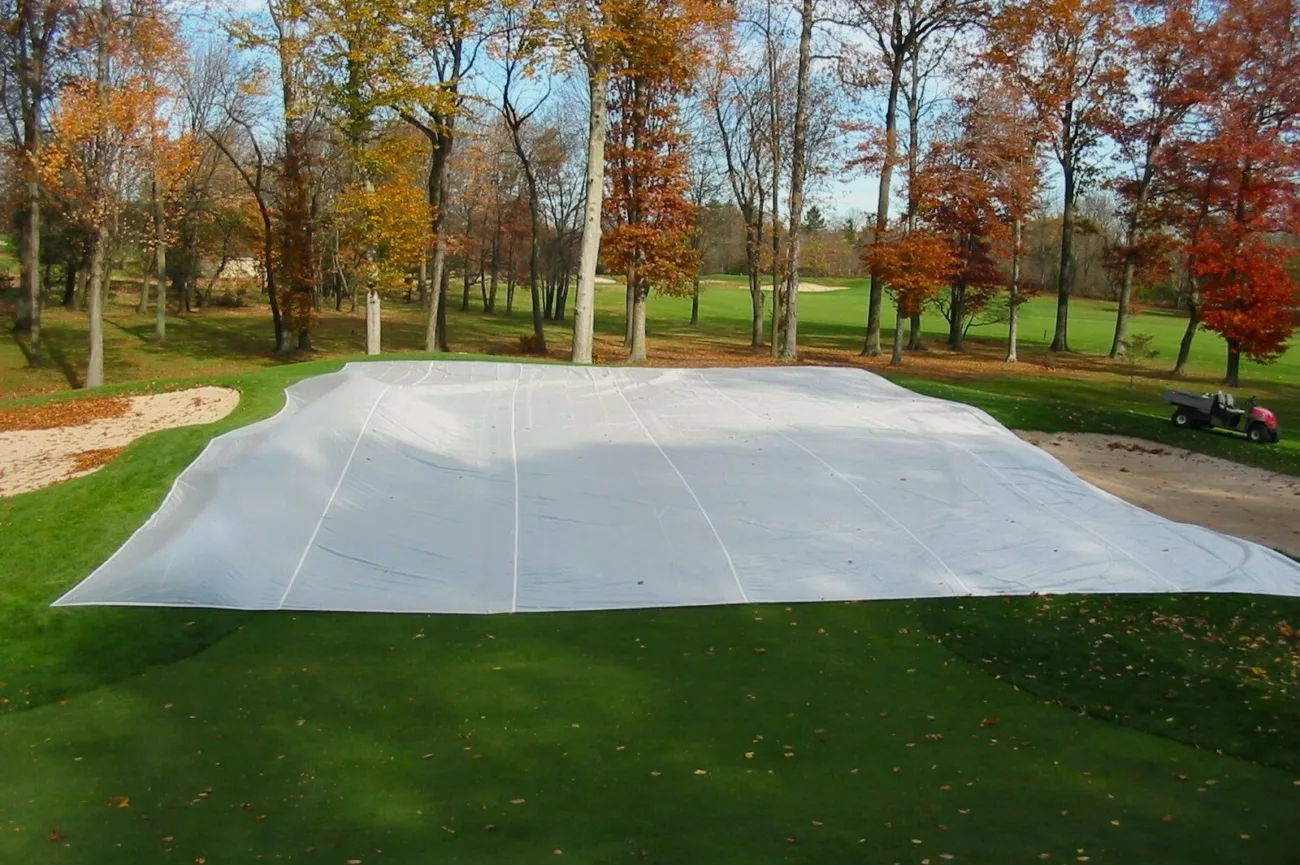
Oversize the coverage: Run the cover well past the edges of the area you want to warm so the microclimate holds at the margins.
Anchor securely and visibly: Stake, staple, or pin through the grommets. Choose anchors you can see so you do not catch them with a mower, and consider non-metal stakes to remove that risk entirely.
Target high-wear zones if budget is tight: Many managers cover only the areas that need the most help, such as goal mouths, sidelines, and center field, rather than the whole surface.
Frequently Asked Questions
When should I put turf blankets down?
In the fall, once nighttime lows reach the 30s and low 40s, and before the turf goes fully dormant. Warm-season grass like bermudagrass should be covered before the first frost so it stays semi-dormant.
When do I take the covers off?
A week or two after spring green-up has clearly started, and about a week before the field returns to play, so it can dry and take a fresh mow. Re-cover for any late-spring frosts.
Can I leave covers on all winter?
Yes, but not untouched. Peel the cover back in midwinter warm breaks, mow once or twice so growth does not get leggy, and vent on days above 55°F to limit disease.
Ready to spec covers for your field? See growth cover sizing and construction on our product page, or contact our team for a custom layout.
CoverSports
5000 Paschall Avenue
Philadelphia, PA 19143, USA

